

Carmel, IN 46032, United States, 20th Aug 2026 – XTJ CNC, a renowned provider of precision CNC machining services, has set out the tolerance standards applied to its machining work, describing how dimensional requirements are graded and what process controls attach to each grade. The description separates general limits, tolerances that sit within routine process capability, and the tighter bands that require additional setups, fixturing, and in-process measurement. The company has published the detail as buyers of machined components increasingly request written confirmation of achievable accuracy, and the controls behind it, before drawings are released for quotation.
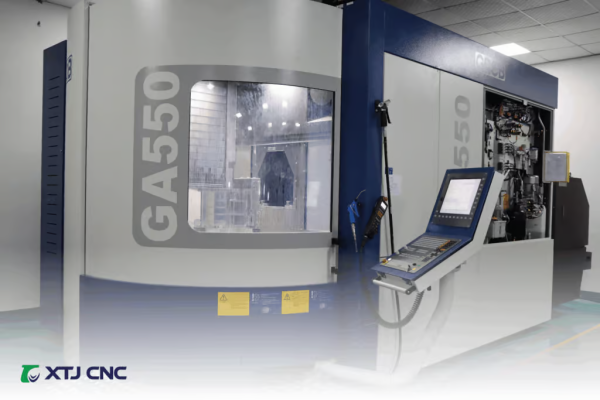
Requirements are grouped into three broad categories. Dimensions carrying no individual callout on a drawing are held to a recognised general tolerance class, confirmed with the customer at quoting. Nominated dimensions that fall within routine process capability are machined and verified through standard inspection. A third category covers features requiring bands tighter than routine practice, which are accepted only after review of the geometry, the material, and the number of operations involved, and which carry additional controls agreed in advance.
The company has noted that tightening a tolerance carries consequences beyond the machining step itself. Tighter bands generally extend cycle times, increase tool change frequency, raise inspection sampling rates, and reduce the margin available before a component is rejected. For that reason, XTJ CNC advises customers to apply tight limits only to features with a functional requirement, such as bearing seats, sealing faces, or mating interfaces, and to leave non-functional dimensions at general limits. Drawings that apply uniform tight tolerances across every dimension are flagged during technical review, and alternatives are proposed where the drawing intent allows.
Equipment condition and process stability form part of the standard. Machine calibration schedules, spindle condition, tool wear monitoring, and compensation routines are recorded, and cutting parameters for tightly toleranced features are selected to limit heat generation and deflection rather than to shorten cycle time. Workholding receives particular attention, as clamping pressure sufficient to secure a part can also distort thin sections enough to move a dimension outside its band once the component is released.
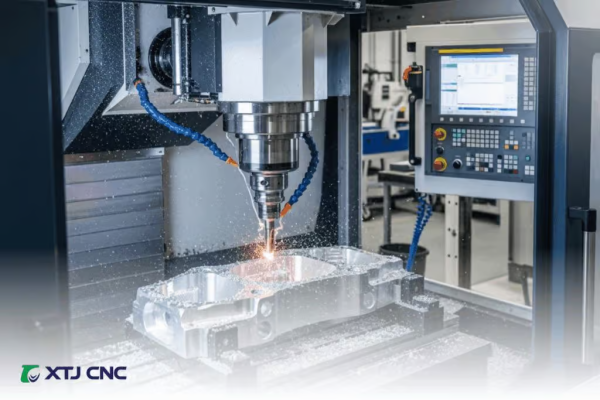
“Grading the work is what makes tight tolerances practical rather than aspirational,” said Hafiz Pan, Director of Operations at XTJ CNC. “A drawing that identifies the four dimensions that actually matter can be produced accurately and economically. A drawing that treats every dimension as critical costs the customer money on features that will never be measured in service, and it consumes capacity that would be better applied to the features that carry the function.”
Secondary operations are accounted for in the tolerance applied at the machining stage. Where a component is to be plated, anodised, or heat treated after machining, the allowance for coating thickness or dimensional movement is calculated before cutting begins, and the machined dimension is adjusted so that the finished part falls within the drawing limit. Components requiring heat treatment between operations are sequenced so that critical features are finished after treatment where distortion is expected.
Verification practice covers measurement uncertainty as well as the measurement itself. Inspection equipment is calibrated on a recorded schedule, gauge studies are carried out where a measurement method is applied repeatedly to a tight band, and measurements on the tightest features are taken in a temperature-controlled area. Sampling frequency for production quantities is agreed at the outset, and inspection records are retained and supplied where the customer requires them.
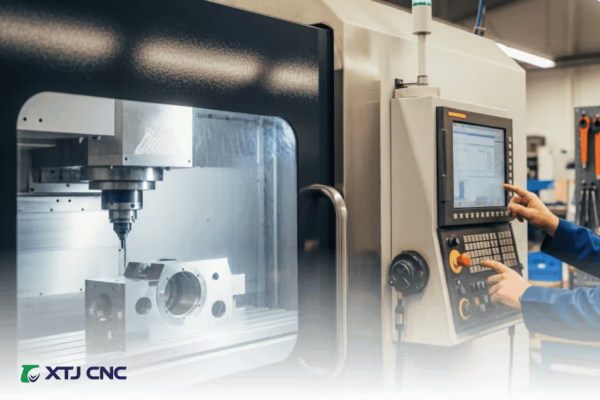
The same standards apply across the facilities that XTJ CNC coordinates, including partner facilities in China used for volume production. Work in the tightest category is allocated to facilities whose equipment has demonstrated the required capability, with acceptance criteria and inspection documentation applied identically regardless of production location.
Demand for closer tolerances has increased across the aerospace, automotive, and electronics sectors, where component miniaturisation and tighter assembly stack-ups have reduced the dimensional margin available to designers. XTJ CNC accepts orders without minimum quantity requirements, and tolerance grading is applied to prototype quantities and production runs alike.
“Capability data is becoming as important to customers as the parts themselves,” said Pan. “Work planned over the coming period is directed at recording process capability more systematically and making that information available at the quoting stage, so that engineers can confirm whether a tolerance is achievable before a design is committed.”
XTJ CNC supplies precision machined components produced by milling, turning, and rapid prototyping in metals and engineering plastics, serving customers in the aerospace, automotive, and electronics industries. The company operates from Carmel, Indiana, and coordinates production across domestic and offshore facilities. The tolerance standards described reflect practice currently applied to work moving through the company’s quoting, machining, and inspection process.
For additional information about High Precision CNC Machining Services and related industry developments, contact XTJ CNC at 506 S Rangeline Rd, Carmel, IN 46032, USA. Enquiries regarding the company’s machined components, engineering support, tolerance grading, and inspection reporting can be directed to +1 218 527 7419 or by email at hafiz@cncpartsxtj.com.
Media Contact
Organization: XTJ CNC
Contact Person: Hafiz Pan
Website: http://xtjcnc.com/
Email: Send Email
Contact Number: +12185277419
Address:506 S Rangeline Rd
City: Carmel
State: IN 46032
Country:United States
Release id:48273
The post XTJ CNC Sets Out Tolerance Standards Applied to Precision Machining Work appeared first on King Newswire. This content is provided by a third-party source.. King Newswire makes no warranties or representations in connection with it. King Newswire is a press release distribution agency and does not endorse or verify the claims made in this release. If you have any complaints or copyright concerns related to this article, please contact the company listed in the ‘Media Contact’ section
Disclaimer: The views, suggestions, and opinions expressed here are the sole responsibility of the experts. No Dive Digest journalist was involved in the writing and production of this article.